Trailing Plants That Actually Thrive Indoors
Even If You Forget to Water Sometimes
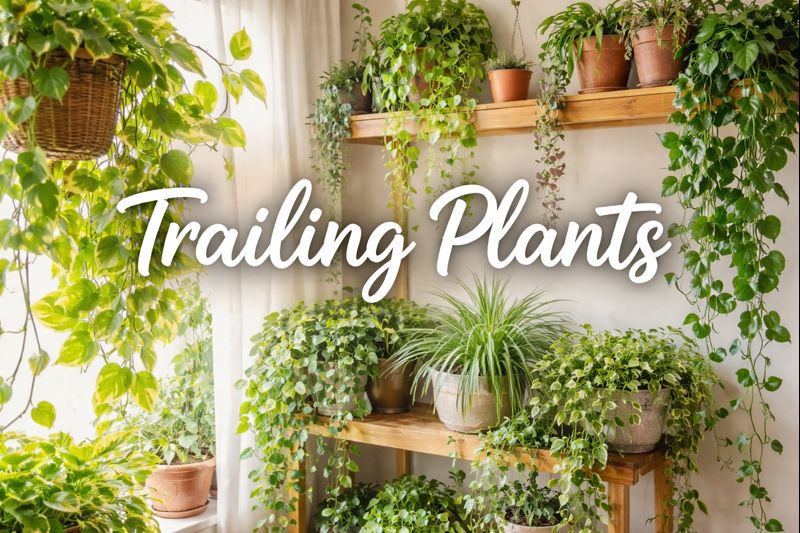
Trailing Plants That Actually Thrive Indoors
There is something about trailing plants that pulls people in.
The way they spill over shelves and soften corners makes a room feel alive, even on quiet days.
But if you are honest, trailing plants also feel intimidating.
They look delicate, dramatic, and like they might punish you for every missed watering.
I have met so many first time plant parents who say the same thing.
They love the look, but they are scared of the responsibility.
As a botanist, and as someone who has forgotten to water plants more times than I would like to admit, I get it.
Life does not move on a watering schedule.
Some weeks are calm and slow.
Other weeks disappear before you even notice the soil is dry.
The good news is this.
Not all trailing plants are fragile, and many are far more forgiving than their graceful vines suggest.
This is not about perfect care or memorizing plant rules.
It is about choosing plants that understand real homes and real people.
Why Trailing Plants Feel Harder Than They Really Are
Trailing plants tend to grow outward instead of upward.
That alone makes people assume they need more attention.
When vines get long, every small change feels dramatic.
A single yellow leaf suddenly looks like a warning sign.
Many indoor growers also place trailing plants higher.
On shelves or in hanging baskets, they are easier to forget.
Out of sight often means out of mind.
That does not make you careless, it makes you human.
What most people do not realize is that many trailing plants evolved to handle inconsistency.
They grew in forests where water did not arrive on a schedule.
Once you understand that, the fear starts to loosen.
You stop hovering, and the plant relaxes too.
What Low Maintenance Actually Means Indoors
Low maintenance does not mean neglect.
It means flexibility.
A low maintenance trailing plant forgives late watering.
It recovers when light is not perfect.
It does not collapse because you went on a trip or had a busy week.
It waits patiently.
These plants tend to grow steadily, not explosively.
They store water in leaves or stems, even if it is not obvious.
They also communicate clearly.
When they need help, they show it gently before things go too far.
That is the kind of plant that builds confidence instead of anxiety.
Especially if you are still learning to trust yourself as a plant parent.
Why Some Trailing Plants Tolerate Missed Watering
Plants that handle missed watering usually share a few traits.
Their leaves are slightly thicker, waxy, or flexible.
Some store moisture in their stems.
Others slow their growth when conditions are not ideal.
Indoor environments matter too.
Warm rooms and steady temperatures reduce stress on roots.
In apartments and small spaces, humidity often lingers longer than we think.
That can be a quiet advantage.
If you have ever blamed yourself for a plant struggling, pause for a moment.
It may not have been you at all.
Sometimes the plant simply was not built for the space you live in.
Choosing the right plant changes everything.
Trailing Plants That Truly Thrive Indoors
Let us talk about plants that actually do well in real homes.
Not the fantasy version of indoor gardening, but the lived in kind.
Golden Pothos
Golden pothos is often recommended, and for once, the advice is solid.
This plant grows steadily and does not panic when soil dries out.
It tolerates uneven light and still produces full trailing vines.
Even when neglected, it keeps trying.
I have seen pothos survive missed waterings that would shock most people.
It is not lazy, it is resilient.
Heartleaf Philodendron
Heartleaf philodendron has a quiet strength.
Its soft leaves make people think it is fragile, but it is not.
It adapts easily to indoor light and handles dry spells gracefully.
When it needs water, it tells you without drama.
This plant is ideal for shelves and bookcases.
It grows with you, not against you.
Spider Plant
Spider plants are expressive.
They show stress early, which actually makes them easier to care for.
If they dry out too long, the leaves lose tension.
Water them, and they recover quickly.
They also thrive in apartments and warm climates.
Their trailing babies add movement and softness to a room.
String of Hearts
String of hearts looks delicate, but it stores water surprisingly well.
Its thin vines hide a tough personality.
This plant prefers to dry between watering.
Overwatering causes more harm than forgetting.
In bright indoor light, it thrives quietly.
It rewards patience more than attention.
Hoya
Hoyas are slow growers with thick leaves.
That combination makes them ideal for forgetful owners.
They dislike soggy soil and prefer drying out.
Missed watering rarely upsets them.
Once settled, hoyas become steady companions.
They ask for little and give a lot over time.
Where Trailing Plants Actually Do Best Indoors
Placement matters, but not in the rigid way people think.
Trailing plants want consistent light more than perfect light.
A bright window nearby is usually enough.
Direct sun is not always necessary.
Shelves work well if light reaches them.
So do window ledges and wall mounted planters.
Airflow also plays a role.
Stagnant air can stress plants more than low light.
Try a spot and watch how the plant responds.
You are allowed to adjust without guilt.
Watering Without Overthinking It
Watering is where most anxiety lives.
So let us simplify it.
Ignore strict schedules.
Instead, notice how the soil feels.
If the top few centimeters are dry, that is usually your cue.
If it still feels damp, wait.
Leaves also speak.
Softness, curling, or dull color often signal thirst.
Overwatering happens when we water out of fear.
Underwatering happens when life gets busy.
Between the two, most trailing plants prefer a little dryness.
Trust that instinct.
Signs Your Trailing Plant Needs Help
Plants rarely fail suddenly.
They whisper before they shout.
Yellow leaves can mean too much water or poor drainage.
Drooping often signals thirst, not death.
Slow growth is not always a problem.
Sometimes it just means the plant is resting.
The key is responding gently.
Do not flood the pot or move it constantly.
Small adjustments go a long way.
Plants appreciate calm energy.
Common Mistakes Almost Everyone Makes
One of the biggest mistakes is fussing too much.
Trailing plants prefer consistency.
Constant repositioning confuses them.
So does frequent repotting.
Another mistake is watering all plants the same way.
Each species has its own rhythm.
Comparing your plant to social media images also creates pressure.
Those photos rarely show real life.
Your plant does not need to look perfect.
It needs to feel stable.
Building Confidence With Trailing Plants
Confidence grows slowly, just like vines.
It comes from observation, not control.
Start with one forgiving plant.
Learn its signals.
As you succeed, your fear softens.
You stop checking soil every day.
Eventually, you trust yourself.
And your plants sense that ease.
Plant care becomes something grounding instead of stressful.
That shift matters more than any rule.
Conclusion
Trailing plants are not tests you must pass.
They are living companions that adapt to the rhythm of your home.
You do not need perfection to grow something beautiful.
You only need patience, curiosity, and a little kindness toward yourself.
If plants can thrive without constant attention, maybe we can too.
So what trailing plant will you try next?