Do Variegated Plants Really Need More Light or Is That a Myth
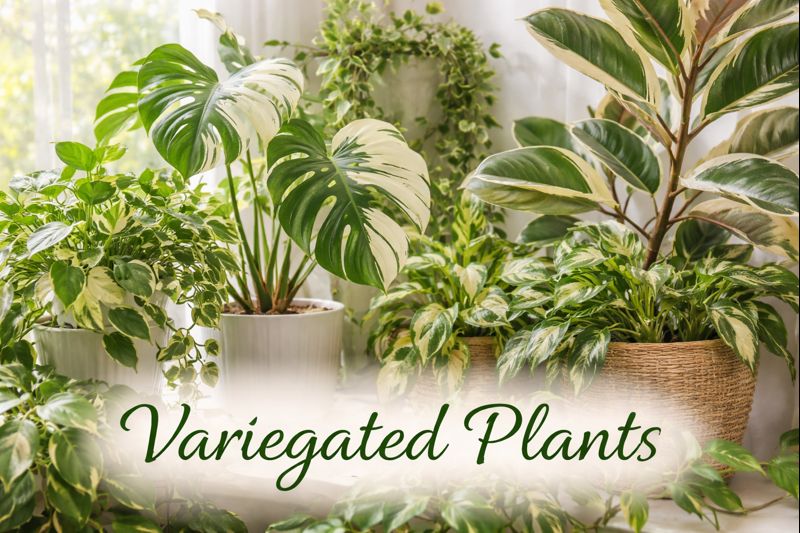
Do Variegated Plants Really Need More Light
I still remember the first variegated plant I ever brought home.
It felt like I was carrying something fragile and special, like a living painting that could judge my every move.
Before the pot even touched my shelf, advice started pouring in.
More light. Always more light. But not too much. Never direct sun. Unless it is morning sun. Or filtered sun. Confused yet?
If you are standing in your apartment right now wondering whether your plant is about to fade into green sadness, you are not alone.
So let us slow down and actually talk about this question in a way that makes sense.
Do variegated plants really need more light, or is this one of those plant myths that refuses to die?
Why Variegated Plants Make Us So Nervous
Variegated plants have a way of making calm people anxious.
The leaves are streaked with cream, splashed with white, or brushed with pale yellow, and suddenly every decision feels high stakes.
Part of the stress comes from how rare or expensive some of these plants can be.
When something costs more than your weekly groceries, you tend to stare at it a little too closely.
Another part is social media.
Perfect windows, perfect lighting, perfect leaves that never brown or fade, all quietly whispering that you are doing it wrong.
What Variegation Really Means in Real Life Terms
Here is the honest truth, without the textbook tone.
Those white or pale sections on a leaf are beautiful, but they are not pulling their full weight.
Green parts of leaves are the workhorses.
They handle most of the energy making, while the lighter parts are more like decorative panels.
This does not mean variegated plants are weak or doomed.
It just means they are working with a slightly smaller energy budget.
Think of it like cooking with fewer ingredients.
You can still make a great meal, you just need to be a little more thoughtful.
Where the More Light Rule Comes From
The advice to give variegated plants more light did not appear out of nowhere.
It is rooted in a very reasonable observation.
Since some parts of the leaf do not photosynthesize as much, the plant often benefits from brighter conditions.
Brighter does not mean harsher, though this is where people get tripped up.
Somewhere along the line, more light turned into blast it with sun and hope for the best.
That leap is where trouble begins.
More Light Does Not Mean Direct Sun
Let us clear this up gently.
More light is not the same thing as direct sunlight pouring through glass at noon.
Most variegated houseplants still come from environments where light is filtered.
They are used to brightness without burning.
A bright room with a sheer curtain can be more helpful than a sunny windowsill that cooks leaves.
Consistency matters far more than intensity.
If your plant could talk, it would probably ask for steady light, not drama.
What Low Light Actually Looks Like Indoors
Low light is one of the most misunderstood phrases in plant care.
It does not mean darkness or a room where you need a lamp at midday.
Low light often means light that is too far away to be useful.
A window across the room may feel bright to you, but plants experience space differently.
For variegated plants, low light can quietly encourage greener leaves over time.
Not because the plant is failing, but because it is adapting.
Signs Your Variegated Plant Wants More Light
Plants rarely scream.
They whisper first.
You might notice new leaves coming in with less pattern.
The white fades, the cream shrinks, and green starts taking over.
Growth may slow down, not dramatically, but enough to make you wonder.
Leaves may stretch slightly, reaching instead of resting.
These signs are not emergencies.
They are feedback, and feedback is something you can work with.
What Too Much Light Looks Like Instead
On the other end of the spectrum is sun stress.
This is the crispy edge stage that makes plant parents panic.
White or pale areas can scorch faster than green ones.
They may turn brown, papery, or washed out.
This damage is usually cosmetic, not fatal.
Plants are surprisingly forgiving when you catch the issue early.
Moving a plant back a little, or adding a curtain, can make all the difference.
Why Apartments Make Light Feel Complicated
Apartment living adds another layer to this conversation.
You do not always get to choose your windows.
North facing windows can feel like a curse at first.
South facing ones can feel overwhelming and unpredictable.
East and west windows bring their own personalities.
Morning sun is gentle, afternoon sun is intense, and both change with the seasons.
The good news is that variegated plants are adaptable.
They care more about stability than perfection.
Do All Variegated Plants Need the Same Light
This is where rules fall apart.
Not all variegated plants are built the same.
Thicker leaves often tolerate brighter conditions better.
Thinner leaves may appreciate brightness without direct exposure.
Some plants hold onto variegation stubbornly.
Others are more willing to shift toward green when energy feels scarce.
Observation beats comparison every time.
Your plant is responding to your home, not someone else’s.
The Myth of the Perfect Spot
Many new plant parents spend weeks moving a plant from place to place.
One day it is near the window, the next it is pulled back, then pushed forward again.
Plants need time to adjust.
Constant relocation can be more stressful than slightly imperfect light.
Pick a spot that feels reasonably bright and livable.
Then give your plant a chance to settle in.
Sometimes doing less is the best care.
Can Grow Lights Help or Are They Overkill
Grow lights have a reputation for being intense and complicated.
In reality, they are just another tool.
For apartments with limited natural light, a gentle grow light can help maintain variegation.
It does not have to look like a science experiment.
That said, grow lights are optional.
Many variegated plants do just fine without them.
If adding one feels stressful, skip it.
Plants can sense your energy, or at least it feels that way sometimes.
Why Some Variegated Plants Turn Greener Over Time
This part worries people the most.
A plant that slowly loses its pattern can feel like a personal failure.
In reality, it is often a survival choice.
Green leaves are more efficient, and plants like efficiency.
Turning greener does not mean your plant is unhappy.
It may actually be thriving in its own practical way.
You can gently encourage variegation with better light.
But there is no need to wage war on green growth.
Learning to Read Your Plant Instead of the Internet
Online advice tends to speak in absolutes.
Plants do not live in absolutes.
Your plant’s leaves, growth rhythm, and posture tell a story.
It takes time to learn that language.
As a botanist, I still get it wrong sometimes.
That is part of the relationship.
Trust builds through observation, not perfection.
A Gentle Reality Check for New Plant Parents
You are not expected to master light overnight.
Plants are forgiving teachers.
Most variegated plants decline slowly, not suddenly.
You have time to notice changes and respond.
Your apartment does not need to become a greenhouse.
Your plant just needs a place that feels steady and kind.
Care is a conversation, not a checklist.
Subtle Wins That Mean You Are Doing It Right
A new leaf unfurling without stress marks is a win.
So is a plant that looks calm and balanced.
Stable variegation, even if it is not dramatic, is a win.
Slow growth is often a sign of comfort, not trouble.
Plants do not rush.
They grow at the pace that makes sense for them.
Letting Go of the Fear Around Light
Once you release the idea that there is one perfect setup, everything gets easier.
Light becomes something you work with, not against.
You start noticing patterns instead of panicking over rules.
You adjust gently, not reactively.
This is when plant care becomes enjoyable again.
This is when confidence quietly shows up.
Conclusion
So Do Variegated Plants Really Need More Light or Is That a Myth
The honest answer is softer than the internet makes it seem.
Variegated plants usually appreciate brighter light, but they do not need extremes.
They want consistency, patience, and a little understanding.
They want a home that feels stable, not perfect.
If you listen closely and adjust slowly, your plant will meet you halfway.
And maybe the real question is not how much light they need, but how comfortable you can become growing alongside them, right?