Best Indoor Trees for Apartments and Small Living Rooms
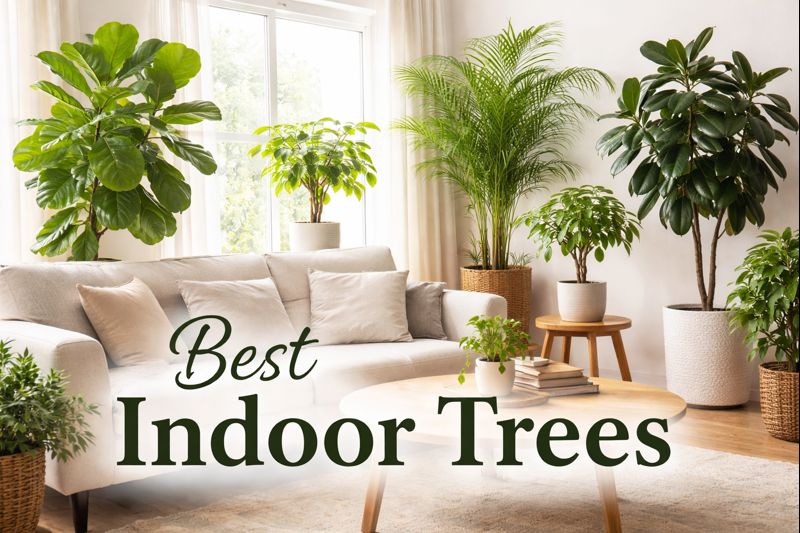
Best Indoor Trees for your home
The idea of bringing a tree indoors sounds romantic until you actually live in an apartment.
Low ceilings. Tight corners. One decent window that already does too much work.
Still, the pull of a leafy tree in a living room never really goes away, does it?
As a botanist, I have watched so many people talk themselves out of indoor trees before they even start.
They imagine massive roots, constant leaf drop, and a plant that judges them every morning.
But indoor trees are not the villains they get made out to be.
What most people really want is not a jungle.
They want presence. Height. Something alive that makes the room feel finished.
And yes, that is possible even in a small living room.
Why Indoor Trees Feel Harder Than They Actually Are
Trees come with baggage.
We see them outdoors growing wild and tall and stubborn, and assume they will behave the same inside.
That assumption alone scares off so many first time buyers.
Indoors, trees slow down.
They listen to light, temperature, and space in a very different way.
Most of them just want consistency, not perfection.
The truth is many indoor trees fail because we try too hard.
Too much water. Too much moving them around. Too much panic.
Plants can sense chaos in their own quiet way.
What Makes a Tree Apartment Friendly
Not every tree belongs inside, and that matters.
Apartment friendly trees grow upward more than outward.
They respect walls and ceilings instead of racing toward them.
Root behavior is another quiet factor people ignore.
Some trees stay surprisingly compact below the soil.
Others spread like they are planning an escape.
Growth speed matters too.
A slow grower is not boring in an apartment.
It is peaceful.
A Realistic Look at Apartment Light
Most apartments do not get bright light all day.
They get moments of brightness followed by long stretches of softness.
That is normal, even if social media says otherwise.
Light through sheer curtains still counts.
Reflected light from pale walls still helps.
Trees adapt more than we give them credit for.
The problem usually is not low light.
It is assuming a dark corner is bright enough just because it feels open.
Plants see light differently than we do.
Fiddle Leaf Fig in Small Spaces
This tree has a reputation that scares beginners away.
Honestly, some of that fear is earned.
But it is also misunderstood.
In small living rooms, the fiddle leaf fig works when it is given a single clear spot.
Near a window. Not pushed into traffic.
Once settled, it likes routine more than attention.
It does not want to be rotated every week.
It does not want surprise watering schedules.
Leave it alone and it often rewards you.
Rubber Tree as a Bold Apartment Choice
Rubber trees are calmer than they look.
Their leaves are thick and forgiving.
They hold moisture longer than most people expect.
In apartments, they grow upright and slow.
They tolerate slightly lower light better than a fiddle leaf fig.
They also respond well to gentle pruning.
One rubber tree can anchor a living room without shouting.
It feels intentional, not crowded.
That matters in small spaces.
Dracaena Trees and Why They Work So Well
Dracaena trees do not get enough credit.
They grow straight, stay narrow, and handle indoor life gracefully.
That combination is rare.
They do not demand bright windows.
They tolerate missed waterings better than most trees.
They also look good in simple containers.
For first time indoor tree owners, dracaena feels forgiving.
Mistakes do not show immediately.
That gives people confidence.
Money Tree and Compact Living Rooms
Money trees look playful but behave politely.
They stay compact for years indoors.
They rarely surprise you with sudden growth spurts.
They like bright areas but do not fall apart without direct sun.
They also respond well to consistent watering rhythms.
Nothing extreme, just attention.
In small living rooms, money trees fit without overwhelming furniture.
They add softness rather than bulk.
That balance is hard to beat.
Olive Trees Indoors and Honest Expectations
Indoor olive trees are beautiful.
They are also demanding in subtle ways.
This is where honesty matters.
They need strong light.
They dislike frequent moves.
They prefer a drier watering style.
In bright apartments with south facing windows, they can thrive.
In darker spaces, they struggle quietly until leaves drop.
Style should never outrank reality.
Parlor Palm for Gentle Green Height
Parlor palms have been indoor companions for generations.
There is a reason they never disappear.
They adapt.
They stay soft and airy.
They tolerate lower light and shared spaces.
They do not dominate a room.
For apartments, parlor palms bring height without pressure.
They are patient plants.
Perfect for beginners who want calm energy.
Trees That Outgrow Apartments Too Fast
Some trees look small in the store and massive six months later.
That is not your fault.
It is marketing.
Fast growers can overwhelm small spaces quickly.
Large ficus types and certain palms fall into this category.
Once they stretch, there is no undo button.
If a label says fast growing, believe it.
That speed rarely slows indoors.
Choosing slower trees saves stress later.
Pot Size and Placement Mistakes
Big pots feel safe.
They also hold more water than roots can handle.
That causes problems quietly.
A pot should fit the root ball, not the dream size.
Trees grow into space over time.
They do not need it all at once.
Placement matters too.
Airflow helps.
Crowding hurts.
Watering Without Overthinking
Overwatering is the fastest way to lose an indoor tree.
Roots suffocate long before leaves show stress.
By then, panic sets in.
Let the soil tell you the truth.
Dry top layers mean something.
Heavy pots mean wait.
Consistency beats schedules.
Your apartment conditions change with seasons.
Your watering should change too.
Keeping Trees Below the Ceiling
Ceilings matter more than people admit.
A tree touching the ceiling feels stressful.
Plants feel it too.
Pruning is not cruelty.
It redirects energy.
It slows vertical growth.
Rotating occasionally helps balance growth.
Choosing the right container helps too.
Control is possible without force.
Styling Trees in Small Living Rooms
One tree is often enough.
It should feel chosen, not squeezed in.
Negative space is not empty space.
Corners near windows work best.
Avoid blocking walkways or seating.
Let the tree breathe.
The goal is harmony, not filling every inch.
Plants shine when they are respected.
Crowding dulls their presence.
When an Indoor Tree Is Not the Right Choice
Sometimes the timing is wrong.
Life gets busy. Light is limited.
That is not failure.
Starting with smaller plants builds confidence.
Trees can come later.
There is no rush.
Plants should support your life, not complicate it.
That truth matters more than trends.
Listening to it saves plants and people.
Where to Buy Healthy Indoor Trees
Local plant nurseries understand indoor conditions better than big stores.
Their plants are often acclimated already.
That makes a difference.
Look for firm stems and balanced growth.
Avoid plants that lean dramatically.
Healthy roots matter more than perfect leaves.
Ask questions.
Good sellers love to talk about their plants.
That enthusiasm is a good sign.
Living With an Indoor Tree Long Term
Trees grow with you.
They reflect your space and your routines.
They teach patience quietly.
Leaves drop sometimes.
Growth pauses sometimes.
None of that means you failed.
Indoor trees are relationships, not decor items.
They respond to care, not control.
That mindset changes everything.
Final Thoughts
Bringing a tree into a small living room is an act of hope.
It says you want something living and lasting in your space.
That matters more than perfection.
With the right tree and realistic expectations, apartments can hold surprising beauty.
Growth does not need endless space to be meaningful.
Could this be the moment you finally choose a tree that grows with your life rather than against it?