Why Philodendrons Thrive Where Other Houseplants Struggle
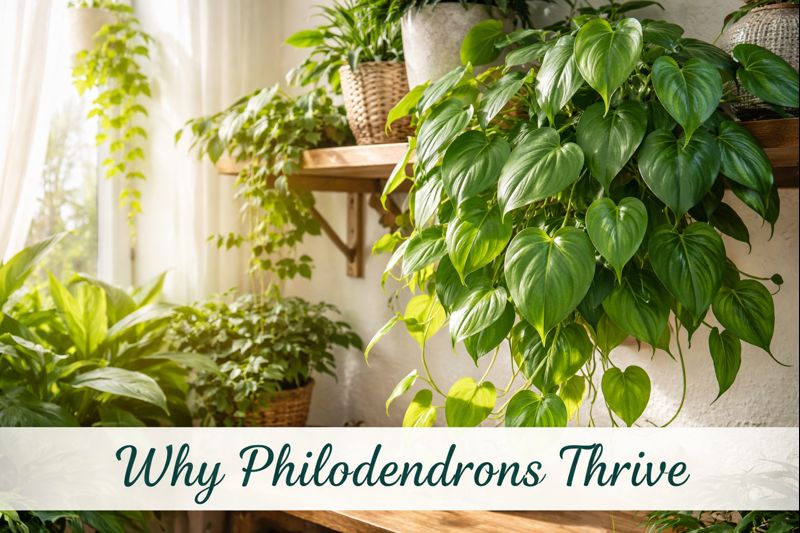
Why Philodendrons Thrive Instead of Quitting
I have watched a philodendron grow happily in a corner where light barely reaches.
The same spot turned a fern crispy and made a fiddle leaf sulk for months.
Why does this plant keep going when others seem to give up so easily?
As a botanist, I notice patterns long before I write care notes.
Philodendrons show up again and again in homes where schedules are messy and windows are few.
There is something quietly resilient about them that deserves a closer look.
A Plant Shaped by Shade
Philodendrons did not evolve in bright open fields.
They come from forest floors and climbing trunks where light is filtered and inconsistent.
That background matters more than most care guides admit.
Living under trees teaches patience.
These plants learned how to wait, how to stretch slowly, how to make do with what arrives.
An apartment corner suddenly feels familiar rather than hostile.
Leaves That Know How to Work Smarter
Those wide leaves are not just there to look dramatic.
They are built to catch soft scattered light and hold onto it.
Every square inch is doing quiet work.
I often run my fingers along the surface and notice how sturdy it feels.
Not stiff, not delicate, just prepared.
That structure buys time when light is not ideal.
Roots That Adapt Instead of Protesting
Philodendron roots are not obsessed with perfection.
They tolerate uneven moisture and cramped pots longer than most plants should.
They adapt instead of panicking.
This is why missed watering days rarely cause immediate drama.
The roots slow down and wait rather than shutting everything off.
It is a survival strategy, not laziness.
Low Light Is an Adjustment Not a Crisis
Low light does not scare a philodendron.
It simply changes pace.
Growth becomes slower, leaves space out, but life continues.
Many houseplants treat low light as an emergency.
Philodendrons treat it like a long quiet season.
That difference explains so many success stories.
They Tell You When Something Is Wrong
One thing I appreciate deeply is how clearly they communicate.
Leaves soften, curl slightly, or pause before things get serious.
They give warnings instead of surprises.
For beginners, this is everything.
You get time to notice and adjust without feeling like you failed overnight.
Plants that speak softly teach better than plants that collapse suddenly.
Soil Flexibility That Forgives Mistakes
Philodendrons are not picky about soil mixes.
They want drainage, yes, but they are not rigid about formulas.
This flexibility saves people who are still learning.
I have seen them survive in mixes that would doom more delicate species.
Not forever, but long enough for correction.
That grace period matters in real homes.
Humidity Is a Preference Not a Demand
They enjoy humidity the way we enjoy fresh air.
Nice to have, not essential for survival.
Dry rooms slow them down but rarely stop them.
This is why they tolerate air conditioned apartments so well.
They adjust their growth rather than shedding leaves in protest.
Adaptability shows itself quietly.
Growth That Adjusts to Your Space
Give them something to climb and they will reach upward.
Leave them trailing and they spill gently over shelves.
They do not insist on one identity.
This flexibility helps small space dwellers more than they realize.
The plant adapts to the room rather than demanding a redesign.
That cooperation feels rare in houseplants.
Why Other Plants Struggle Indoors
Many popular houseplants come with narrow tolerances.
Exact light, exact water timing, exact placement.
Miss one detail and decline begins.
Philodendrons are generalists.
They handle variation without collapsing.
In unpredictable homes, generalists thrive.
Confidence Grows Alongside the Plant
I often see people regain confidence because of a philodendron.
After losing plants, success feels healing.
You start trusting yourself again.
This emotional shift matters more than perfect care routines.
Plants that survive teach patience instead of guilt.
They invite curiosity rather than fear.
Mistakes They Quietly Let Slide
Overwatering once or twice rarely ends the relationship.
Late repotting is tolerated longer than expected.
Even uneven light gets a pass.
This does not mean they love neglect.
It means they understand learning curves.
That understanding builds loyalty.
When Even Philodendrons Struggle
There are limits, of course.
Constantly soggy soil or complete darkness will cause trouble.
Resilience is not invincibility.
The difference is how slowly decline happens.
You usually see it coming.
That window for response makes all the difference.
What Living With One Teaches You
Philodendrons teach observation over obsession.
They reward consistency, not perfection.
They remind you that growth can be uneven and still healthy.
I think that lesson extends beyond plant care.
Life indoors is rarely ideal.
Adaptation keeps things alive.
A Closing Thought From a Botanist
Every thriving philodendron tells a quiet story.
Not of perfect care, but of tolerance, patience, and small adjustments.
That is why they succeed where others struggle.
If you are busy, learning, or simply human, this plant meets you halfway.
And maybe that is why it feels so comforting to live with one, right?